
Tending Gardens
Art by Rebecca J. Hartman

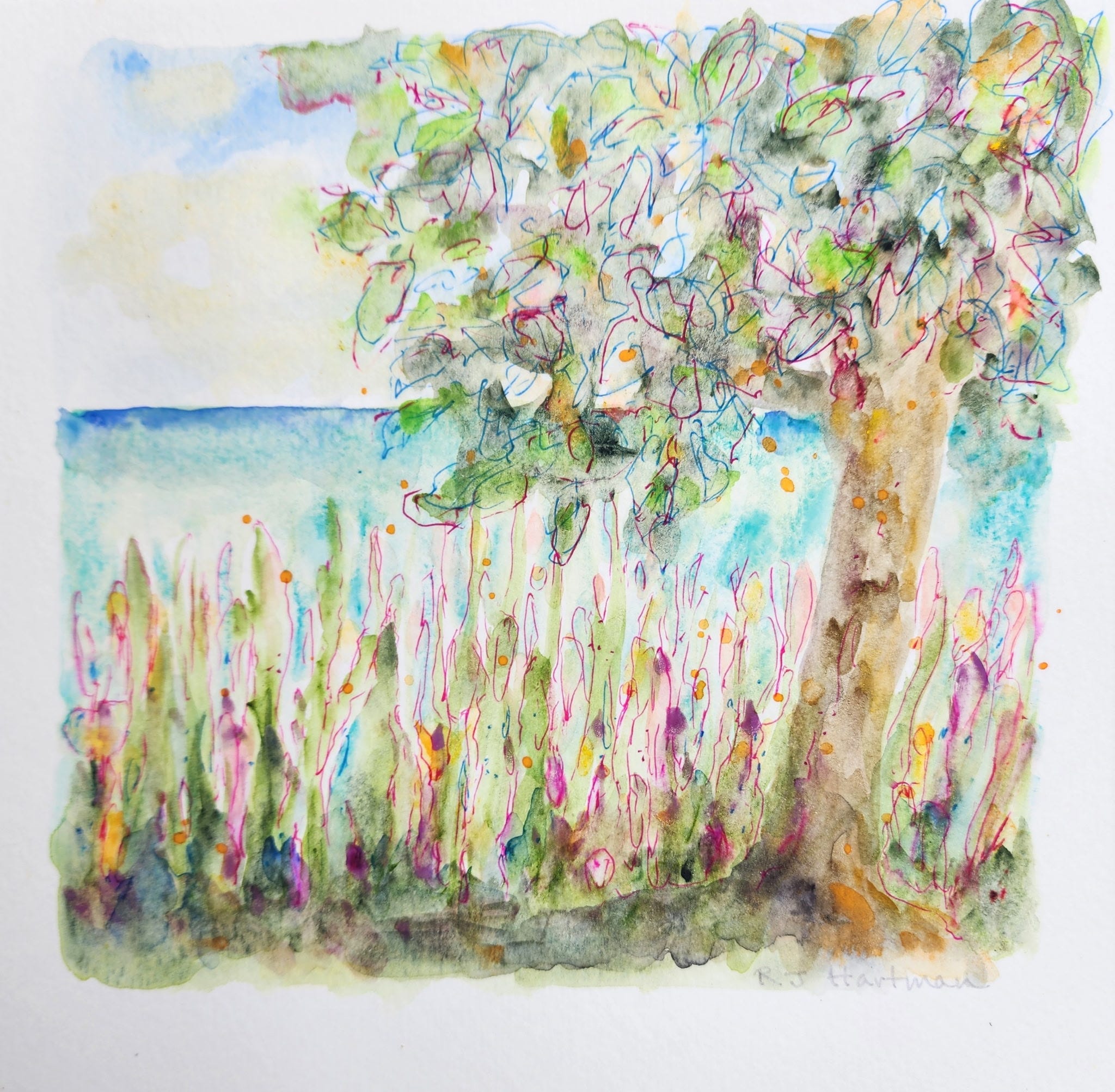
Richard Rohr writes in Immortal Diamond that “the good, the true, and the beautiful are always their own best argument for themselves,” and that seems about right. The aggressive, contentious, and hateful aren’t winning many friends or lasting influence in my book, and I find I have very little control over that anyway.
That’s why I have decided to tend my own garden rather concentrating on too much outside my own fence right now—because I want some peace.
First thing every morning, I water the mint and the mandevillas and try not to think about how I would change Stephanie White’s Fever basketball lineup because that kind of thinking drives me nuts and serves no good purpose.
Down by the back fence, where patches of flowers line the lake, I check on the daisies and balloon flowers, the coneflowers and yarrow. Then I water the roots of the birch trees. Since reading Richard Pollan’s work on plant consciousness, I say a few kind words to the tomato plants and begonias.
I give less than a minute’s thought to Trump’s degradation of the people’s White House, his knocking down an entire wing, pulling up the rose garden, cutting old-growth trees along the lawn, and building a wrestling ring where the grass once was. For thirty seconds I consider his golf-course contractor’s painting the reflecting pool in a gauche swimming-pool blue with waterproofing issues. I can do nothing about any of that until at least November, if then.
What I can do is plant my gift of native milkweed and trim the honeysuckle, which just this week sheltered a most encouraging surprise (more on that later). I can remove the bluebird house that the killer sparrows have commandeered for the eighth and final time and place it face down in the grass for the remainder of the season. On the birdhouse pole that remains, I’ll entwine a clematis and hope that looks as nice and natural as a house full of baby blue birds, though it probably will not.
I am claiming boundaries required for peace of mind without giving up on what I consider the right kind of contributions to the common good.
On the side of the house where the native honeysuckle has overtaken the latticework arch and fence, I have salvaged the Studio M art pole and its matching untenanted birdhouse, which I don’t suppose has ever attracted anything natural or beautiful in its ten years of existence. I’ve hung the house too low for occupancy, counting on its artisanship for its raison d’être. No one except the dogs will visit that narrow stretch of grass anyway.
And wouldn’t you know it: Last week I was stunned to find one blue egg inside, then two, then three, then four. The mother bluebird visits only at night and sits there in the dark, but I’ve seen her fly out in the morning. What will happen? I have no idea, and I can do very little about it except rejoice for now.
I can tend my own garden, including the forgotten side yard, work on my own peace, and control what I can control. That includes a few pots of begonias, saved from the trash bin at the nursery, that are coming along quite nicely and could be ready when the encouragement of begonias might be most needed for gift-giving.
Rejoice for now!